Pattern · seen in 2 breakdowns across 2 companies
Conservative Auto-Remediation
Before an expensive automatic fix fires, we need evidence that it is actually worth its cost and time. A brief blip should not trigger an automatic costly cure.
The mechanism
The pattern at its core: an ambiguous signal that a system component might be down, and the choice between firing an expensive fix at once or waiting long enough to be sure the fix is actually needed.
Fire an expensive fix twitchily or wait for evidence - test each against a brief blip and a real outage.
Definition
When an automatic recovery action is expensive, damaging, or hard to reverse, don't let it fire on weak evidence. Demand evidence that matches the cost of the action, and count elapsed time as part of that evidence: a brief, unclear blip should not be able to trigger an hours-long, drastic fix. When a system is only partly broken, the signals are unreliable, so the question you are really asking changes. It stops being just 'is this component down?' and becomes 'is my evidence strong enough to justify a fix this costly, given the damage it does if I've got it wrong?' The delay before the fix fires is tuned for each target, based on how costly that fix is - not on some single, system-wide 'react within N seconds' goal.
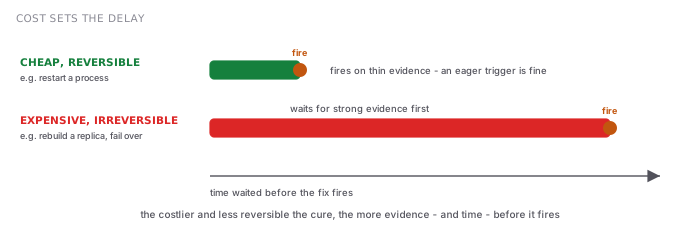
This pattern is about the response, not the detection. It assumes signals will sometimes be unclear or plain wrong, and limits how eagerly any signal is allowed to act. It helps to place it against two neighbors:
- Dead Man's Switch adds a way to detect trouble - a missing heartbeat is the signal - while this pattern slows the response, no matter what detected the problem
- Throttled Readmission paces how fast traffic returns to a service after it recovers, while this pattern paces the firing of the recovery action itself
When it applies
Tradeoffs
The same move, 2 ways
Every row is a production system that bet on this pattern — the note says how, in that system's own terms.
Problems this pattern answers
The walls where its breakdowns live — each opens the cross-company comparison.