Pattern · seen in 6 breakdowns across 6 companies
Universal Staged Rollout
Universal staged rollout means every change - not just code, but config and auto-updates - rolls out gradually, so a bad one is caught early instead of hitting all the application servers at once.
The mechanism
The pattern at its core: a fleet of servers, one change to ship, and two ways to ship it - all at once, or a small wave at a time with a health check between waves.
Send a bad change through the channel nobody staged - it takes the whole fleet at once.
Definition
Every production change has to go out the same careful way: a little at a time, monitored, then widened. The real danger is the change path nobody thinks of as change - an auto-update that is on by default, a vendor tool that upgrades itself, a scheduled job that runs on every machine at the same minute. A path like that turns one hidden bug into an outage that hits every machine at the same moment, and it does so precisely because nobody ever listed it as a way change gets in.
So list every way a machine can change, and either put each one through staged rollout or turn it off. The paths that count:
- code deploys
- configuration changes
- infrastructure automation
- OS and security updates
- vendor agents that upgrade themselves
- scheduled jobs that run everywhere at once
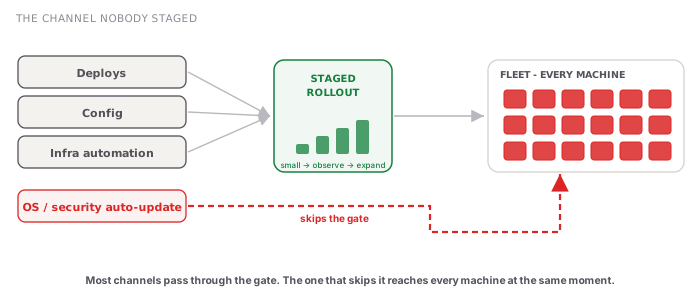
Shutting a fast channel off is cheapest when it is redundant - when something else already delivers the same change through a staged path, closing the fast one costs nothing. When it is not redundant, the pattern puts the real tradeoff on the table: how much change the fleet can safely take at the same time, against how fast a fix needs to reach everywhere. This is different from Conservative Auto-Remediation: that pattern limits how eagerly automation reacts to failures; this one limits how much change of any kind reaches the fleet at once.
When it applies
Tradeoffs
The same move, 6 ways
Every row is a production system that bet on this pattern — the note says how, in that system's own terms.
Problems this pattern answers
The walls where its breakdowns live — each opens the cross-company comparison.